Pairing a manual espresso machine with a mediocre grinder is one of the most common mistakes home baristas make. Espresso is unforgiving — grind size affects extraction more here than in any other brew method. This guide covers what a proper manual espresso grinder needs to get right, using the Aeirisse Divellence as a reference point for what good espresso grinding actually looks like.
Why espresso demands more from a grinder
Espresso uses a narrow, fine grind band (roughly 100–200 microns) and pushes hot, pressurized water through it in under 30 seconds. Any inconsistency in particle size shows up immediately as sourness, bitterness, or channeling — where water finds the path of least resistance through the puck instead of extracting evenly. There’s no brew method less forgiving of a bad grind. If you’re weighing manual against electric for this exact reason, our coffee hand grinder comparison covers why manual often wins on precision.
What the Divellence brings to the espresso bar
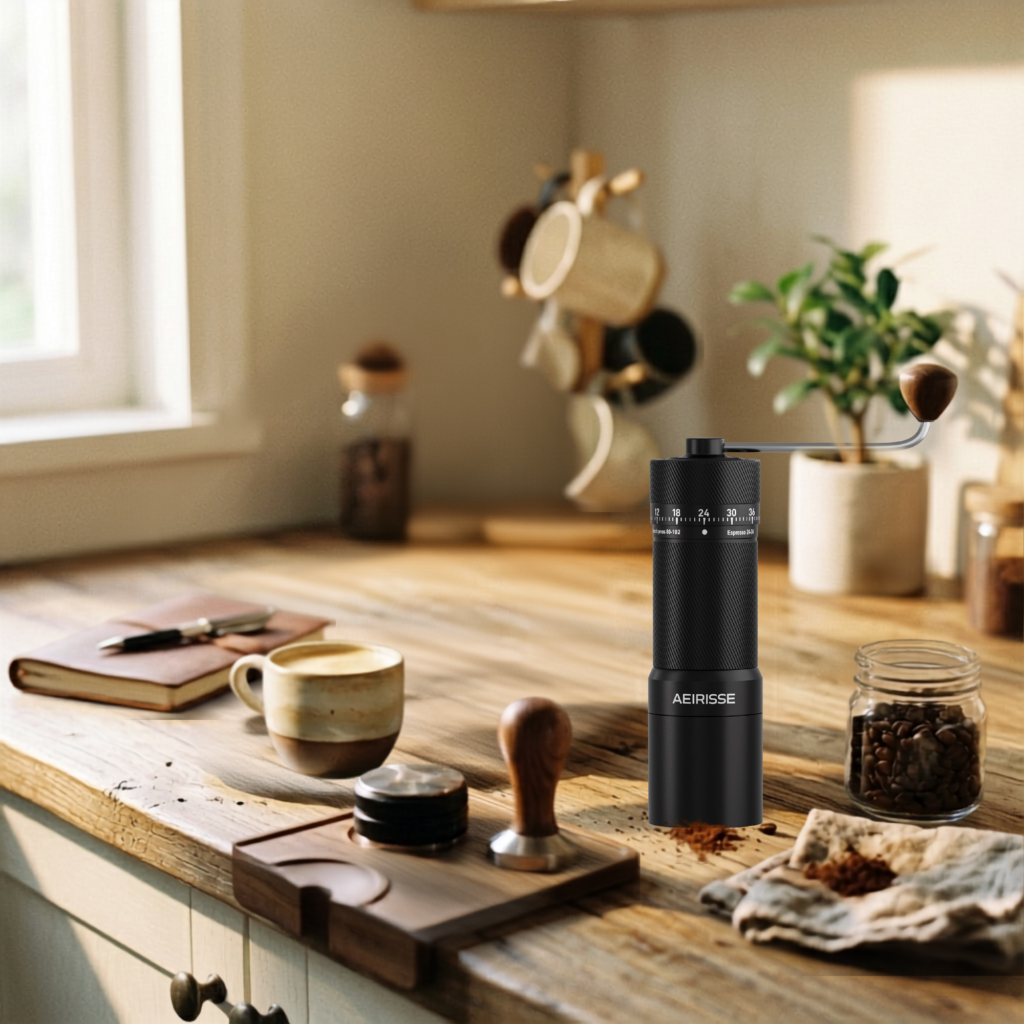
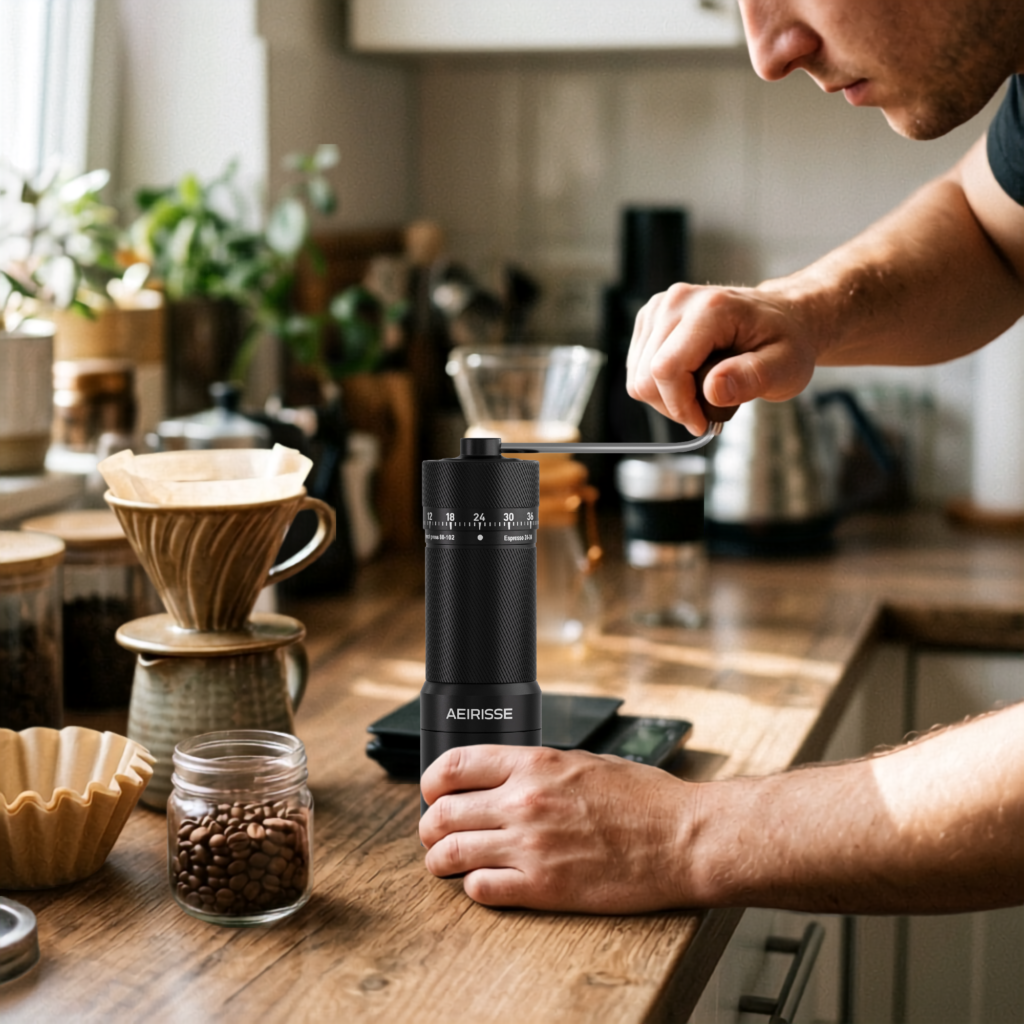
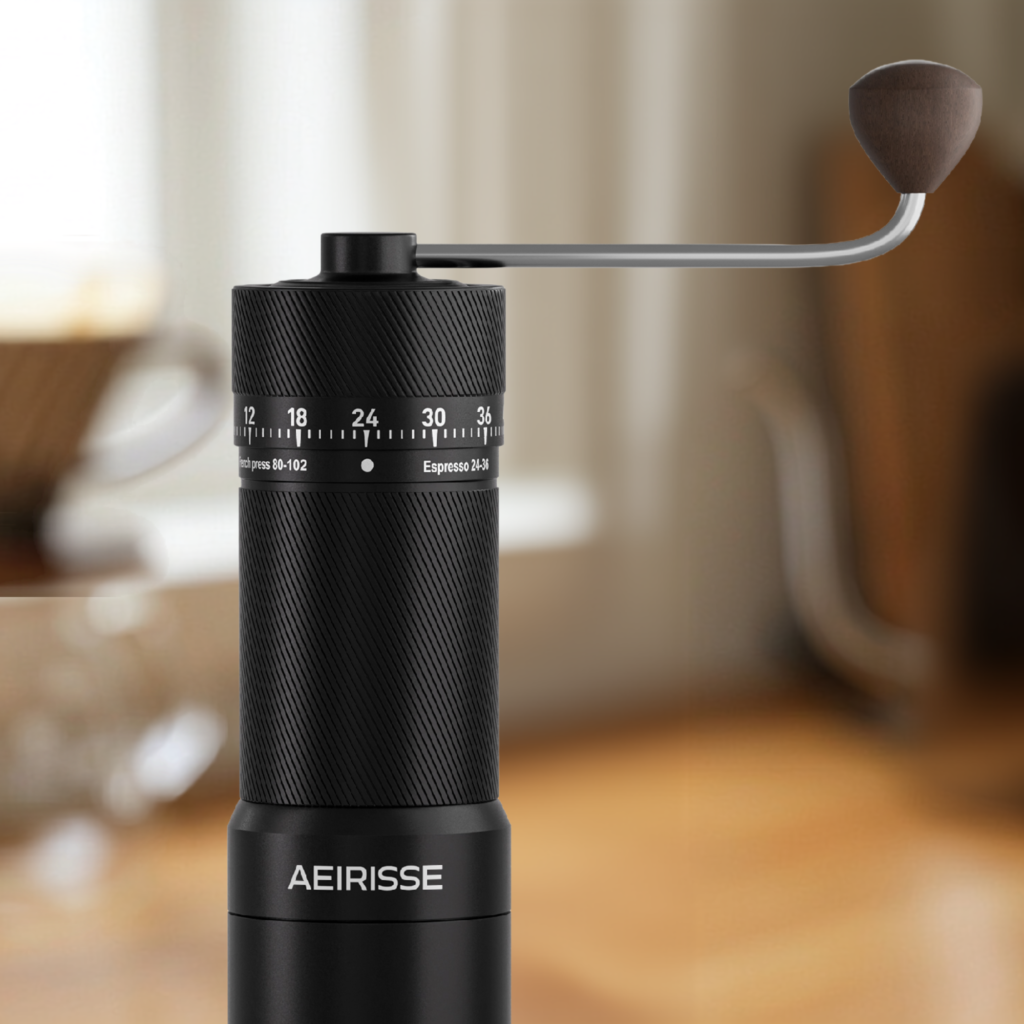
The Divellence’s 38mm conical burr, cut from SUS420 stainless steel and hardened to HRC 56, is built for exactly this kind of fine, consistent grinding. The 72-click adjustment ring — each click just 0.016mm — puts espresso squarely in clicks 24 to 36, giving you enough resolution to fine-tune extraction time without ever overshooting your target and having to backtrack past it.
Espresso click reference
| Setting | Click Range | Result |
|---|---|---|
| Very fine (ristretto-leaning) | 24–28 | Slower extraction, more concentrated |
| Standard espresso | 28–33 | Balanced 25–30 second shot |
| Slightly coarser (lungo-leaning) | 33–36 | Faster extraction, lighter body |
Use this as a starting map, not a rulebook — roast level, bean age, and humidity will all nudge your ideal setting slightly. For a full walkthrough of adjusting from here, see our step-by-step manual espresso grinder dial-in guide.
Pairing with your manual espresso machine
Whether you’re using a lever machine or any other manual espresso machine, the grinder is doing half the work before water ever touches coffee. A consistent, low-fines grind from the Divellence means your machine’s pressure profile can actually do its job — instead of compensating for uneven particles that no amount of tamping or pressure adjustment can fully fix.
Common mistakes with manual espresso grinding
- Grinding too far in advance. Espresso-fine grounds lose freshness fast — grind right before pulling your shot.
- Skipping the dose weigh-in. A precise grinder loses its advantage if your dose varies by a gram or two each time.
- Chasing extraction time alone. Taste matters more than the clock — use timing as a guide, not the final word.
Where to Buy
The Aeirisse Divellence is available now on Amazon.
👉 Shop the Aeirisse Divellence on Amazon
The takeaway
A great shot starts before the machine. Get the grinder right, and everything downstream — tamping, pressure, extraction — gets easier. If you’re setting up a full home espresso station rather than just a grinder, our manual coffee bean grinder guide for home baristas covers the bigger picture.